

[ad_1]
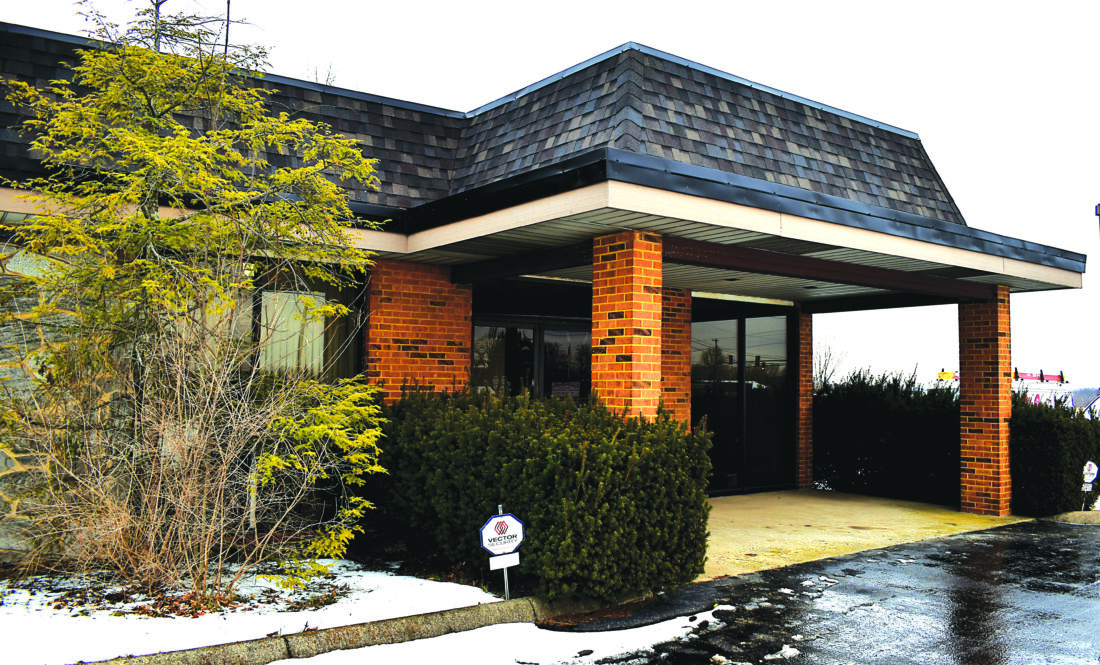
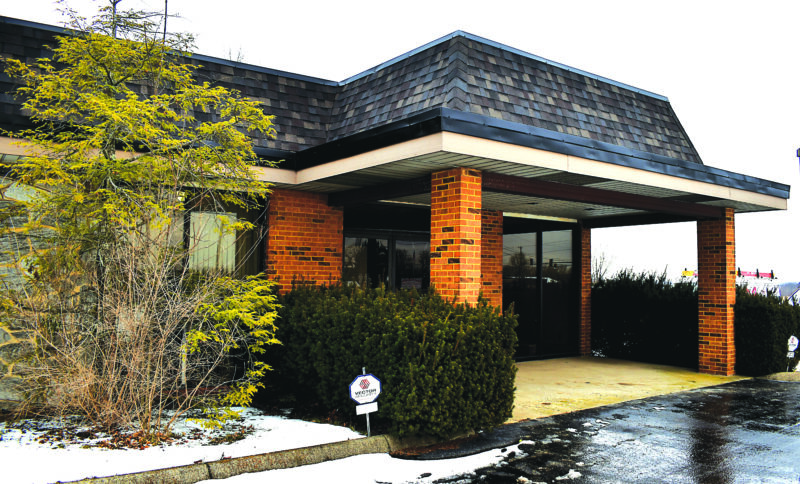
The Columbiana County Mental Health and Recovery Services Board recently acquired a former doctor’s office located on state Route 14 in Unity Township that will be transformed into a facility to address the impacts on mental health and help the community heal. The center, which is
currently under renovations will offer residents traditional
counseling, support groups and 12-Step meetings, and
non-traditional programming, such as trauma-focused yoga classes, creative arts, and animal therapy. (Photo by Stephanie Elverd)
A wise man once said that “on the other side of a storm is the strength that comes from having navigated through it.”
For many in and around East Palestine, that storm rolled in with a thundering clash when a likely overheated wheel bearing led to 38 cars of a Norfolk Southern freight train barreling off track.
It’s been one year since the flames that followed the derailment burned bright against the black backdrop of a frigid February night. The fires have been long put out, the wreckage cleared and the ground beneath the jumbled cars remediated and restored, but for some the proverbial storm clouds still linger.
Marcy Patton, the executive director of Columbiana County Mental Health and Recovery Board, acknowledges those clouds but she also believes in silver linings.
“The derailment was a terrible, traumatic thing,” Patton said. “But good things have come in its wake and we really want to focus on the positive things that have happened after it. Yes, this bad thing happened. But what can we do to help people heal and what good can come from it and has come from it.”
Some of that good was delivered in the form of two emergency response grants the recovery board received with the aid of the Ohio Department of Mental Health and Addiction Services (OMHAS) and through the U.S. Department of Health and Human Services’ Substance Abuse and Mental Health Services Administration (SAMHSA). The first being an immediate $209,402 response to support mental health in the aftermath of the derailment and the second a $879,509 intermediate grant to establish more long-lasting services to assist those impacted by the rail disaster. The grants were used to fund the East Palestine Resiliency Project — an initiative to provide help and promote healing for those affected by the rail disaster.
“When the derailment first happened, we were among the many people who ended up at the health clinic helping people and we had volunteers come in from all over the state at that point because we really didn’t have enough people for those six weeks,” Patton explained. “During that time OMHAS realized there was a grant opportunity that was available to the county. The state actually applied for that grant on behalf of the county to get the services to the people who desperately needed them.”
The first grant was awarded in the weeks following the derailment. The second was announced in September, bringing the total funding to $1,088,911.
When deciding the ways to best use the funds, the Recovery Board sat down with the people impacted — residents who were living at or near ground zero and the health care professionals who rushed to the front lines.
“When we first were talking about this grant, we brought people together and did a brainstorming session”
We invited people from East Palestine, from the schools, we invited providers. We just invited a lot of people to come together and we asked ‘what could you use, what could be beneficial, what could be some good things’,” Patton said. “That’s when the idea of yoga and mindfulness, therapy animals and more holistic things came up. So as we started talking about those pieces, we realized we needed a place to offer those pieces. We didn’t want to send people to 10 different locations.”
It was soon realized that a centralized facility was needed and the idea of the East Palestine Resiliency Center was born. The idea became a reality when the Recovery Board located a building just outside the village in Unity Township. Norfolk Southern was asked to help purchase the property and complete the renovations necessary to house the project. Patton acknowledged Norfolk Southern’s contribution in securing a physical location, but also made it clear that Norfolk Southern’s involvement begins and stops there.
“We had already looked at that building and we asked Norfolk Southern to help us purchase it and we have been very transparent about that,” Patton said. “But we also understand people are leery, and while we are very appreciative and grateful for Norfolk Southern’s help, the services are funded through the grant.”
Dianah Fabry, who was hired to direct the East Palestine Resiliency Project, also stressed that any and all services provided at the center will remain between the providers and the patients.
“I’ve heard concerns that personal information may be passed on to Norfolk Southern and we want people to know that, number one, Norfolk Southern paid for the building, but they are not paying for the services and, number two, that’s against HIPAA standards,” she said. “We want to educate people on those things because we want people to understand that and trust us and use the services. We want these services to help people and not push them away over some kind of worry or concern they may have or even a stigma of receiving services.”
Patton added that though the stigma of mental health services still exists, it’s waning, and she said the center opens up alternative avenues on the road to recovery.
“I think the world is talking a lot more about mental health and mental wellness,” she said. “And there’s not just one way to achieve that. It’s achieved through multiple things and it’s different for each individual. Everybody has their own way to heal. That’s why we are really excited about the Resiliency Center. Having the facility opens up the possibilities for a lot of different things that can be really helpful. Not everybody wants to do talk therapy but they might appreciate the chair massage.”
The massage chairs, along with other innovative services, were written specifically into the grant. The center will provide traditional counseling, but it will also offer therapy animals, mediation groups, yoga, creative arts (music and art) therapy for both children and adults. There will also be space available for 12-step groups and educational sessions related to mental wellness. A licensed counselor will be on staff and on site as will a community educator to perform outreach and a community navigator to help people who don’t know what to do or where to start.
A substance abuse counselor will also be available at the center to help those with addiction struggles to get to the other side of that storm without returning to self-destructive habits.
“In times of stress, use of maladaptive coping strategies increases,” Patton said. “That could mean relapse or increased substance use to cope with the anxiety and depression an event like the derailment often causes.”
While the Resiliency Center is perhaps the biggest undertaking in terms of utilizing the grant money, the funds are far-reaching.
“The grant has a bunch of different components to it. The Resiliency Center is a big part of that, but it has a whole lot of other parts as well,” Patton said. “But the whole grant is designed around that resiliency and the immediate things and what you can do to bounce back. Everything is designed around mental health, mental wellness, coping skills, stress management, and how to help people feel better beyond just counseling and surviving a bad situation.”
Patton and Fabry explained there are three primary objectives to the grant. “The first is immediate and ongoing mental health and behavior needs of the community as a result of the train derailment,” Patton said. “The second to minimize long-term impacts of the derailment and foster resilience and help the community comeback from all this. And third is to increase our staff during crises and enhance our ability to respond to crises in the county whether it’s something else, or God forbid, another event like this.”
The funds also allow the board to build on services already provided in the county such as Threshold Residental’s sensory garden in East Palestine and the First Responder Wellness Program’s retreat known as ‘Camp Braveheart’.
The grant puts a heavy emphasis on helping first responders recover and rebound.
“First responders see a lot of things everyday and are just expected to go on. We do crisis intervention, debriefing and just support and we always have, but this grant helps expand on that,” Patton said. “And there were approximately 400 responders who responded to the derailment, and they started some support groups and the response has been amazing. These peers really want to help other peers. Whether they are going for themselves or because they really want to help people, we are getting an amazing response.”
Patton said the Crisis Mobile Response Team also offers peer support and is another existing program to be boosted by the grant. The idea behind that program is for individuals with lived experiences — such as people who are in recovery from substance abuse or mental health — to reach out as state-certified peer supporters to others who are struggling. Patton said the grant allows the peer supporter staff to grow.
“The biggest problem is we didn’t have enough people but now we are going to be able to add to that with a few of them being assigned primarily to East Palestine to provide that additional support,” Patton said. “So again our Crisis Response Team will be enhanced by having individuals who have that lived experience and who can be there to help and encourage others who are actively struggling.”
Ongoing educational seminars focused on mental wellbeing to train those involved in all facets of disaster response are also funded through the grant. The first funded training session – a National Organization for Victims Assistance (NOVA) session to basically understand how to better help the people that have been affected by community-wide disasters — took place in June. Other sessions followed, centering on how to facilitate community resiliency after a disaster, physiological first aid and CARE (child adult relationship training). A much-needed session on traversing through first responder subculture was also held.
“First responders see trauma every single day in their profession and a lot of the time that trauma gets minimized,” Fabry said. “And sometimes, first responders don’t want to appear weak, they don’t want to open up and they don’t want to complain. The training was about helping clinicians find a way to relate to those first responders, get on their level and make sure they receive the care they need after something like this.”
More sessions addressing topics such as skills for psychological recovery, suicide scale training and mental health triaging are planned for the future. Those sessions are presented by a long list of esteemed professionals like Dr. Melissa Brymer, the Director of Terrorism and Disaster Programs at UCLA and Duke Universities and the National Traumatic Stress Network. Brymer regularly responds to disasters, including the fires in Maui, 9/11, Oklahoma City Bombing and Sandy Hook school shooting.
“Dr. Melissa Brymer is a person who has responded to every traumatic event across the country and across the world,” Patton said. “So we are getting the top people coming in for these training sessions who are sharing invaluable knowledge with us here in Columbiana County.”
Columbiana County too has knowledge to share. Another goal of the grant is to learn from the events in East Palestine and apply that gained efficiency and proficiency to other disaster responses in the future.
“If there’s other traumatic events across the country, maybe some of the things that we have done and implemented here can be replicated in other places,” Patton said. “We are working with Sales Force, which is a national database. And that’s a part of the grant. We are collecting data about who is coming in, what kind of services are provided, the biggest things we are doing outreach wise, what’s working, how people feel about services, the numbers and demographics. We share that information, but nothing identifying to compromise privacy.”
A year out, both Patton and Fabry said much has been learned by the ripples and waves caused by the derailment and by the efforts to calm those choppy waters. They also recognize that more ripples are likely.
“The emotional and behavioral health impacts of something like this often last much, much longer than the physical impacts. The mental impacts can last for years,” Patton said. “Obviously, there’s the physical concerns which some are still experiencing and they have fears of the long-term impacts, but a lot of the mental health aspects seem to get minimized. People think ‘oh you should just get over it and move on’ but some people don’t experience trauma right away either. It doesn’t hit them until later or if there’s a trigger, like the anniversary for instance.”
But the purpose of the grant is to guide people to the services that will help lead them to mental wellness. Those services are free of charge based on what Fabry called “broad criteria”.
“It is based on your residence, but it is also based on if you worked in the village at the time of derailment or if you are a first responder, basically any individuals who were directly impacted by the derailment,” she said. “And as long as there are grant funds, those services will remain free of charge. Even people who have relocated and are not planning on returning to East Palestine, are eligible to receive services.”
Fabry also reminded residents that telehealth services are also available as is transportation and financial assistance.
“We do have some financial assistance and transportation assistance for individuals who are receiving counseling at certain locations within the county,”she added.“We don’t want transportation or location to be a barrier for anyone who wants services.”
Patton echoed those sentiments.
“We really have, since the beginning, been able to offer assistance. If people want to get counseling, they can get it at no charge. We don’t want people to be struggling and not be able to afford help or not be able to get there,” Patton said. “The whole grant is designed to get services and the immediate things to the people impacted by this derailment, but it’s also designed to foster resiliency and do what we need to do to bounce back, and people in East Palestine and this county are bouncing back.”
(selverd@mojonew.com)
[ad_2]
Source link
